If you’ve ever slipped on a brand-new pair of shoes and felt that “hmm… these need a little time” moment, you already understand something important about bras. A great bra—especially one designed with thoughtful engineering for petite proportions—needs a short break-in period to mold to your body, soften, and settle into its best fit.
That’s not a flaw. It’s a feature.
A bra is one of the hardest-working garments you own. It supports, lifts, shapes, and stabilizes your breasts all day long. And unlike shoes, which are mostly rigid materials, bras are made of mostly elastic and can include over 30 individual parts—sometimes more in specialty styles. That’s hooks, rings, sliders, wings, cups, padding, channeling, wires, elastics, stabilizers, linings, and stitching, all working together in harmony. When you’re shopping for bras in smaller band and cup sizes—28A through 38D—the engineering has to be especially precise, which is exactly why the break-in period matters so much.
What’s Actually Happening During the Break-In Period
During the first few wears, your bra is quietly doing a lot of adjusting:
- The elastic begins to relax just enough to contour to your body
- The band molds to your ribcage
- The cups warm and shape to your natural curves
- The straps settle into their optimal tension
- The wire (if present) finds its most comfortable placement
This is why a bra should feel snug—but not painful—on the first wear. A too-loose bra will only get looser, while a properly fitted one becomes more comfortable and more supportive over time. If you’re not sure where to start, The Little Bra Company’s Fitting Room walks you through the process, and the Fit Calculator can help you confirm your size before you even open the box.
Step 1: Expect a Snug Fit at First
A new bra should feel firm on the loosest hook. This is intentional. Starting snug gives you room to tighten as the elastic naturally relaxes with wear—meaning you’ll get more life out of every bra.
A few things to check on that first wear:
- If the band rides up in the back, it’s likely too loose
- If the cups wrinkle or gape, they may be too tall or too large for your frame
- If the straps dig, adjust them before assuming the size is wrong
For petite frames especially, band fit is everything. Learn more about how smaller band sizes should feel on the Fit Tips page, or watch the video guides if you’re more of a visual learner.
Step 2: Wear Your New Bra Gradually
The best way to break in a bra is to ease into it:
- Start with 1–2 hours the first day
- Increase to a half day over the next couple of wears
- Work up to a full day once the elastic begins to relax and the materials have warmed to your body
This gives the elastic, cups, and straps time to adapt without overstretching—which can actually shorten the life of your bra if you skip this step.
Step 3: Use the Scoop & Swoop
This technique makes a noticeable difference in both comfort and shape, and it’s especially relevant for those of us who’ve spent years in bras that weren’t made for our proportions.
- Lean forward slightly
- Use your opposite hand to scoop breast tissue up from the sides and bottom
- Let the cup settle and contour naturally around the tissue
Once you do this, the difference in how the bra sits—and how it looks under clothing—is immediate. The Fit Tips videos on TLBC’s site demonstrate this technique and other hands-on adjustments worth bookmarking.
Step 4: Let the Elastic Rest Between Wears
Because so much of a bra’s construction relies on elastic, recovery time matters.
- Rotate between 2–3 bras rather than wearing the same one every day
- Allow at least 24 hours between wears so the elastic can rebound
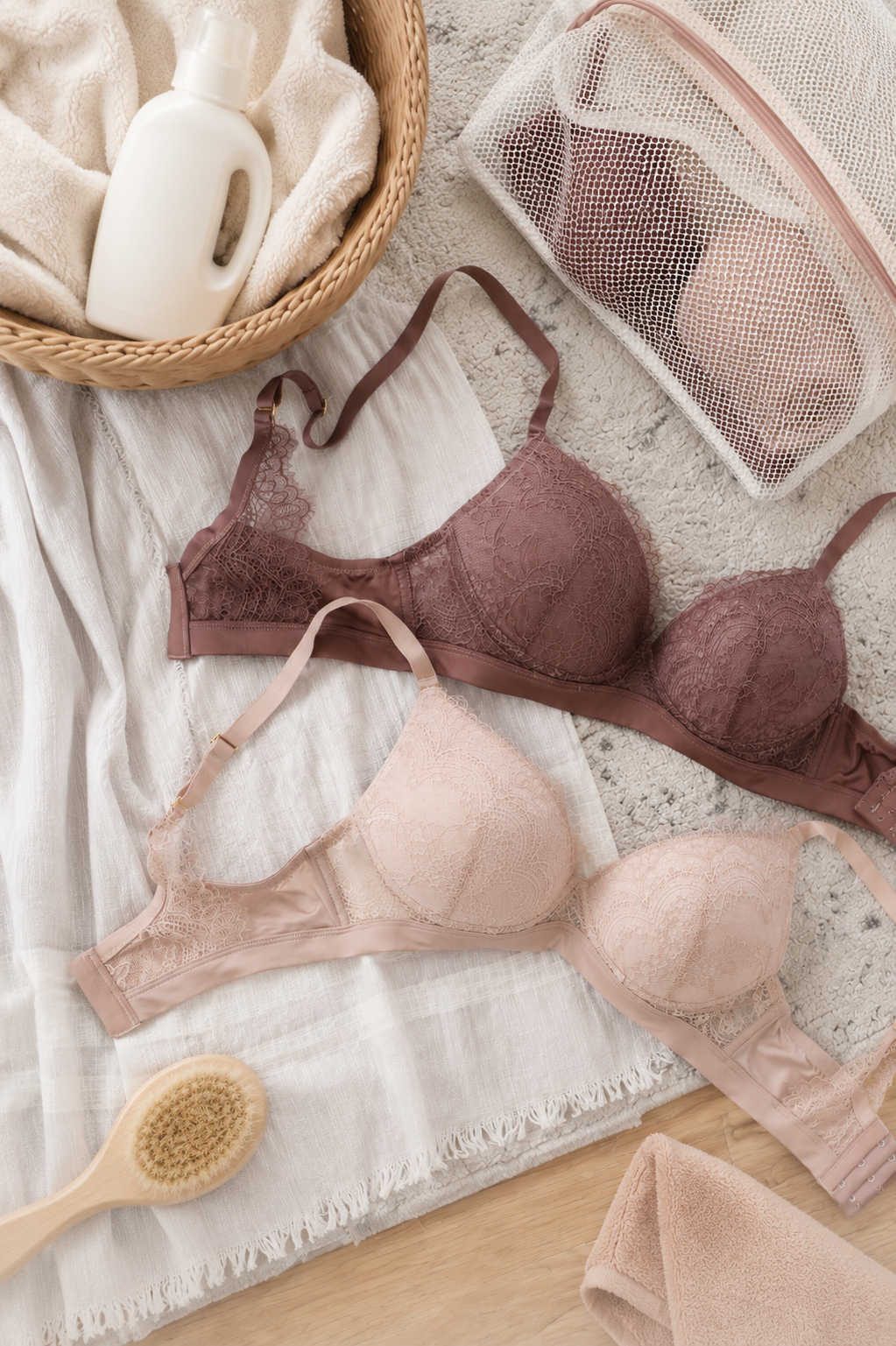
- Hand wash or use a lingerie bag to protect the fibers—TLBC’s Care Instructions cover exactly how to do this
This one habit alone can significantly extend the life of every bra in your rotation.
Step 5: Adjust the Straps After the First Few Wears
As the bra settles, the straps may loosen slightly. Once you’ve worn it two or three times, revisit the strap tension:
- Tighten if they’ve slipped or if you’ve lost lift
- Loosen if they’re leaving marks or digging into your shoulders
- Check that they’re not doing the band’s job—the band should provide about 80% of your support
For petite and narrow-shouldered frames, strap placement can make or break a fit. If you’re between styles and aren’t sure which silhouette works best for your shape, the Fitting Room is a great place to get personalized guidance—or reach out directly via phone or chat.
Step 6: Reassess Fit After 2–3 Wears
Once the bra has had a chance to mold to your body, do a full fit check:
- Band: Should feel secure and sit level all the way around—not riding up in back
- Cups: Should lie smooth with no gaping, no wrinkling, and no spillover
- Straps: Should stay in place without digging
- Center gore (wired styles): Should tack flat against your sternum
If something still feels off after the break-in period, it may be a sizing issue rather than a fit-adjustment issue. TLBC’s FAQ covers common fit problems and their fixes, and exchanges are easy if you need a different size.
The Bottom Line
A break-in period isn’t a flaw in your bra—it’s part of the engineering. A bra designed for smaller bands and cups, like those in The Little Bra Company’s collection, is a precision garment with dozens of components working together to lift, support, contour, and move with you every single day.
Giving it a few wears to settle into your shape is part of the process. And when it does? That’s the moment—the “oh wow, this fits like it was made for me” moment.
Not sure where to start? Browse the best sellers, or let the Fit Calculator point you in the right direction.